Grandmother Landlord Sues Georgia Department of Community Affairs For Mismanagement of Covid Rental Assistance Funds






Atlanta, GA — A Georgia landlord, grandmother and senior citizen, who says she feels “scammed by the State,” has filed a lawsuit in Fulton County against the Georgia Department of Community Affairs (DCA) asserting mismanagement in the distribution of COVID rental assistance funds. After submitting all requested documentation, enduring months of delays, and receiving an official approval letter, Yolanda Davis was devastated to learn that nearly $10,000 in rental assistance had been erroneously issued to her tenant instead of to her. When the tenant absconded with the funds, DCA refused to take responsibility.
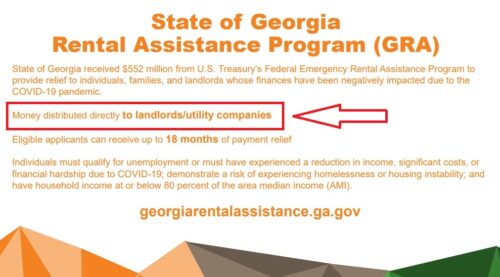
Davis relied on statements made by DCA representatives as well as the agency’s own public materials, which state: “The State of Georgia received $552 million from the U.S. Treasury’s Emergency Rental Assistance Program to provide relief to individuals, families, and landlords… The money will be distributed directly to landlords/utility companies.”
In addition to filing a lawsuit to recover her loss, Davis has reached out to elected officials for support. Her former representative, Congressman David Scott, confirmed that under federal guidelines, landlords—not tenants—are the intended recipients of Emergency Rental Assistance funds. Davis has also contacted Georgia State Representative Rhonda Burnough and her current U.S. Representative, Congresswoman Nikema Williams, as she continues to pursue restitution and raise awareness about a problem that affected small landlords.
“I feel like the State ran a scam on me—and I know I’m not the only one,” Davis said. “You read about the fraud during the Pandemic but don’t hear the stories about small landlords like me who were harmed by bureaucratic negligence. We followed the rules. We did our part, they did not. But we’re expected to take the loss and move on.”
In 2022, after legally obtaining an eviction for a nonpaying tenant, Davis—a small, independent landlord—agreed to participate in Georgia’s rental assistance program to recover the unpaid rent. She complied with all requirements, uploaded the requested documents and waited patiently for payment. When she finally received an official approval letter stating that funds would be issued to her shortly, she realized that nearly $5,000 in additional rent that had accrued during the five months the tenant lived rent-free while awaiting approval was not included the final payment. Despite that significant loss, Davis chose not to dispute the shortfall; she simply wanted to recover what she could and move forward. But in a stunning and unjustified deviation from protocol, DCA issued the entire $9,450 payment directly to the tenant instead of the landlord.
“I don’t make a lot of money, so this had a major impact on both my finances and my health,” said Davis. “It’s reckless for a state agency to release funds to a person who hadn’t paid and then tell me to go sue her. If I had misappropriated funds like the tenant did, the State would be prosecuting me. I didn’t give her the money—DCA did—so I have no legal standing to file criminal charges. That responsibility lies with DCA. Meanwhile, all told, I’m out over $10,000, and no one at the State seems willing to do anything to rectify the situation.”
To sue a state agency in Georgia, citizens must first file an Ante Litem notice with the Department of Administrative Services (DOAS). In response to Davis’s filing, DOAS relayed that the Georgia Department of Community Affairs (DCA) claimed they “typically pay tenants,” a statement that is factually incorrect and flatly contradicts DCA’s own promotional materials and official website, which clearly state that rental assistance is paid directly to landlords and utility companies.
When the landlord presented this evidence—along with documentation showing she had received rental assistance payments directly for other tenants—DOAS responded requesting proof, even though the documentation was already included in the same email thread. Nevertheless, she complied, resending the records.
Davis received an email from DOAS saying they were working with DCA on my issue. That email, dated August 19, 2024, was the last communication Davis received. To date, no one from DCA or DOAS has followed up, offered a resolution, or acknowledged any further responsibility. To date, Davis is not aware of any efforts by DCA to recover the misallocated funds or hold the tenant accountable—despite the fact that agency representatives facilitated the cancellation of a court-approved eviction scheduled by the sheriff’s office for the first week of December 2022, enabling the tenant to remain in the property rent-free until April 2023.
“This wasn’t a clerical error. This was gross negligence,” said Davis, who suffers from chronic health issues that have been worsened by the stress of the ordeal. “It was the State’s mistake, yet I’m the one being told to track down the person who stole the money so I can file a civil suit—one that would likely cost me more in legal fees than I’d ever recover. The worst part is, if not for DCA’s assertions, the sheriff would have carried out the eviction in December. DCA needs to pay me and let their attorneys pursue the tenant for the misappropriated funds.”