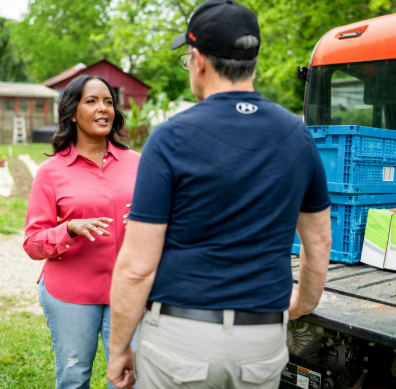
From the Descendant of Enslaved Georgians to Governor: Keisha Lance Bottoms Makes American History



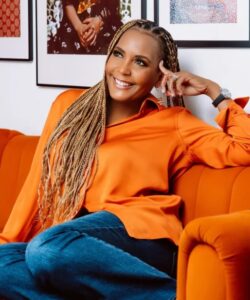 By Edrea Davis -Five generations ago, the ancestors of Keisha Lance Bottoms were enslaved on a plantation near Crawfordville, Georgia. On November 3, their descendant made history, becoming the first Black woman elected governor in the United States and the first woman elected to lead the state of Georgia.
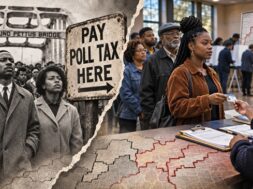
Bottoms’ election carries profound historical significance in a state where slavery, segregation and Jim Crow laws denied generations of Black Georgians political power, economic opportunity and the most basic rights of citizenship.
For Bottoms, the journey from the plantation fields of rural Georgia to the Governor’s Mansion represents more than a personal achievement. It is another chapter in a family history shaped by slavery, segregation, perseverance and the struggle for opportunity.
The former Atlanta mayor defeated Republican businessman Rick Jackson, ending more than two decades of Republican control of Georgia’s governorship and becoming the first Democrat elected to the office since 1998.
Bottoms, 56, is the daughter of the late R&B legend Major Lance, whose hits included the 1960s classics The Monkey Time and Um, Um, Um, Um, Um, Um. Her father enjoyed international success, performing alongside some of the biggest names in music, including opening for the Beatles during their first American tour.
But behind the fame were personal struggles that profoundly influenced his daughter. When Bottoms was a child, her father was arrested on drug charges and eventually imprisoned. Her mother, Sylvia Robinson, worked to support the family, eventually opening a beauty salon.
Those experiences exposed Bottoms to the challenges facing working families and helped inspire her interest in law, criminal justice and public service.
A graduate of Atlanta’s Frederick Douglass High School, Bottoms attended Florida A&M University, an HBCU, before earning her law degree from Georgia State University.
Her political career began in Atlanta, where she served as a municipal court judge and city councilmember before winning election as the city’s 60th mayor in 2017.
When she took office in January 2018, Bottoms became the first Atlanta mayor to have served in all three branches of city government. Her administration would face extraordinary challenges, including the COVID-19 pandemic, nationwide protests over racial injustice and the economic upheaval that followed.
As mayor, she championed affordable housing, criminal justice reform and economic development while promoting her vision of “One Atlanta,” a city where prosperity and opportunity would extend beyond its wealthiest neighborhoods.
Her administration delivered four consecutive balanced budgets without property tax increases, layoffs or employee furloughs, according to her campaign. She also raised compensation for first responders and invested in housing and neighborhood development.
Bottoms’ national profile grew during the pandemic and the protests that followed the killing of George Floyd. After leaving office in 2022, she joined President Joe Biden’s administration as a senior adviser and director of the White House Office of Public Engagement, working with civil rights organizations, business leaders, labor unions and diverse communities across the country.
From Historic Victory to Governing Georgia
Bottoms enters the governor’s office with an ambitious agenda centered on reducing the cost of living, expanding opportunity for working families and addressing longstanding disparities between urban and rural Georgia.
Healthcare is among her leading priorities. She has pledged to expand Medicaid, replace Georgia’s Pathways program, stabilize struggling rural hospitals and improve access to maternal healthcare. Her proposed Rural Care First Initiative would expand emergency medical services, mobile healthcare, telehealth and maternity services in underserved communities.
Her education agenda calls for fully funding public schools, modernizing the state’s education funding formula, expanding early childhood education and moving toward universal childcare. She has also proposed eliminating state income taxes for teachers and creating a pathway to free technical and community college for students and workers seeking new careers.
Addressing Georgia’s housing affordability crisis, Bottoms proposes accelerating construction through a Georgia Housing Fast Track initiative, expanding down payment and rental assistance, and establishing an affordable housing trust fund.
She also wants to provide relief from rising grocery costs by allowing local governments to suspend or eliminate local sales taxes on groceries and essential items, including diapers and baby formula.
Her environmental proposals include investments in flood prevention, water infrastructure and redevelopment of contaminated properties, along with reassessing the rapid expansion of data centers amid concerns about utility costs and water consumption.
A New Chapter in Georgia’s History
Bottoms’ election carries particular significance in a state where the legacy of slavery and Jim Crow shaped generations of Black political and economic life.
Georgia, the birthplace of Dr. Martin Luther King Jr. and home to some of the nation’s most influential civil rights organizations, was also the center of decades of organizing to expand voting rights and political representation.
Her election has already secured a place in American history. Bottoms’ victory follows generations of Black political leadership in Atlanta, beginning with Maynard Jackson, who became the city’s first Black mayor in 1974, and decades of grassroots organizing that helped transform Georgia’s political landscape.
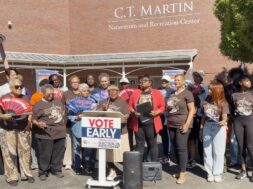
Black women leaders including Helen Butler, executive director of the Georgia Coalition for the People’s Agenda, founded by civil rights icon Dr. Joseph E. Lowery; Deborah Scott, executive director of Georgia STAND-UP; Felicia Davis, convener of the Clayton County Black Women’s Roundtable; and LaTosha Brown, co-founder of Black Voters Matter, helped build the grassroots infrastructure that would reshape the state’s electorate.
Year after year, these women and the organizations they lead have registered voters, educated communities about issues affecting their lives, mobilized voters for local, state and national elections, and implemented voter protection programs to help ensure that every eligible voter can cast a ballot and have that vote counted. Their sustained efforts, often carried out with limited resources, helped lay the foundation for historic voter participation and political milestones, including the groundbreaking gubernatorial campaigns of Stacey Abrams, that once seemed beyond reach in Georgia.