From Surviving Apartheid to Nobel Peace Prize: Navi Pillay Makes History — and Offers Trump a Piece of It





The South African human rights champion who defended Nelson Mandela and spent decades fighting discrimination wins the 2026 Nobel Peace Prize, then delivers a humorous offer to a president whose policies stand in sharp contrast to her life’s work.
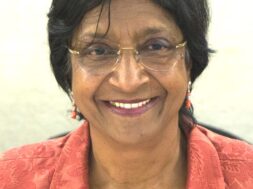
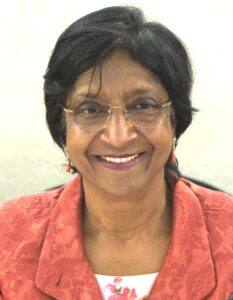 By Edrea Davis – Navanethem “Navi” Pillay survived apartheid, defended political prisoners including Nelson Mandela, shattered racial and gender barriers in South Africa’s legal system, and spent decades holding governments accountable for human rights abuses. On Friday, the 85-year-old jurist added another historic achievement to her extraordinary life: the 2026 Nobel Peace Prize.
And in a moment of humor befitting someone who has spent a lifetime confronting powerful men, Pillay even offered to share her prestigious award with President Donald Trump — if only the audience applauded a little louder.
“If you clap a little bit more, I may share this prize with Trump,” she joked while attending a gathering of human rights advocates in Nuremberg, Germany.
The remark was especially ironic. Here was a woman of color who had dedicated her career to fighting racism, discrimination, oppression and the abuse of power, joking about sharing one of the world’s most celebrated human rights honors with a president whose rhetoric and policies often stand in stark contrast to those principles. Trump has also appointed and embraced figures linked to white nationalist movements, racist language and extremist conspiracy theories, while granting sweeping pardons to individuals convicted of violent crimes, including brutally assaulting police officers during the January 6 attack on the U.S. Capitol
Beneath the humor was a remarkable story of courage, determination and a lifetime spent challenging injustice.
A life shaped by apartheid
Born in Durban, South Africa, in 1941 to a family of Indian Tamil descent, Pillay grew up under a system that legally enforced racial separation and denied basic rights to millions of nonwhite South Africans.
Rather than accept the limitations imposed on her, she pursued a legal career at a time when opportunities for women of color were severely restricted.
In 1967, she became the first woman to establish a law practice in South Africa’s Natal province. She represented anti-apartheid activists and political prisoners, including Mandela, and fought for the rights of prisoners held on Robben Island.
Her achievements continued after apartheid ended. In 1995, she became the first nonwhite woman appointed to South Africa’s High Court, under Mandela’s presidency.
Pillay subsequently became an international figure in human rights law, serving on the International Criminal Tribunal for Rwanda, where she helped establish landmark legal precedents recognizing sexual violence as a crime that could constitute genocide.
She later served as a judge on the International Criminal Court and, from 2008 to 2014, as United Nations High Commissioner for Human Rights.
Her work has taken her from the fight against racial oppression in South Africa to international proceedings involving genocide, war crimes and crimes against humanity.
A Nobel Prize with a powerful message
The Norwegian Nobel Committee awarded Pillay the prize for her contributions to peace and international law, emphasizing her role in strengthening legal institutions that hold governments and individuals accountable.
The announcement came at a particularly significant moment. Pillay chaired a United Nations commission that concluded in 2025 that Israel had committed genocide in Gaza, a finding Israel strongly rejected.
On the very day Pillay received the Nobel announcement, the Trump administration imposed additional sanctions on the International Criminal Court, an institution where she once served as a judge.
The administration has criticized the court’s pursuit of Israeli leaders, while Pillay’s career has centered on the principle that international law should apply regardless of a government’s political influence or military power.
The Nobel Committee warned that international legal institutions were increasingly under attack as governments embraced power over legal accountability.
A Stand Against the Erosion of International Law
Pillay spent her early career fighting a government that used race to determine who deserved rights, privileges and opportunities. Trump has made eliminating diversity, equity and inclusion programs a signature policy.
For a woman who spent her life challenging systems that excluded people because of who they were, the contrast could hardly be more striking.
The greater irony is that the Nobel Committee selected a woman who had devoted her life to defending the very international institutions and human rights principles that have come under increasing political attack.
For Pillay, the honor also represents an extraordinary journey. She joins Mandela, Archbishop Desmond Tutu, Albert Luthuli and former South African President F.W. de Klerk among South African Nobel Peace laureates.
At 85, she is still working, serving as an ad hoc judge at the International Court of Justice in proceedings concerning allegations of genocide against Myanmar’s Rohingya minority.
Receiving news of her Nobel Prize in Nuremberg, the German city where Nazi leaders were prosecuted following World War II, gave the occasion added historical significance.
Pillay dedicated her award to survivors of international crimes and those working to ensure accountability for atrocities.
Her Nobel Peace Prize recognizes more than a distinguished legal career. It celebrates the determination of a woman who experienced institutionalized racism firsthand, fought to dismantle it and went on to help shape international standards for justice.