




Voters saw Donald Trump’s record for years. The choice wasn’t about information—it was about something deeper.
By Edrea Davis – They knew.
They knew who Donald Trump was. They had seen it for years.
They knew he was incompetent. They watched the mismanagement of the pandemic unfold in real time as science was dismissed, facts were distorted, and leadership faltered during one of the most critical moments in modern history. The confusion, the contradictions, the unnecessary loss of life were not hidden. They were broadcast daily, and we saw it because we were confined to our homes.
They knew.
They knew he would lie. There was the constant birther lie that President Barack Obama wasn’t born in America. The false claims about widespread fraud in the 2020 election were rejected by courts, audits, and election officials across the country. Yet the lies continued, repeated so often they became a strategy rather than a mistake.
They knew.
They knew he would incite violence. They heard the aggressive rhetoric constantly. They saw the build-up. And on January 6, they watched it culminate in an attack on the U.S. Capitol, where police were assaulted and property was destroyed.
They knew.
They knew about the rhetoric on race and immigration. The characterization of Mexicans as rapists. The dehumanizing remarks about Haitians, including claims that migrants were “eating cats and dogs.” His response to Nazis marching in Charlottesville, where he said there were “very fine people on both sides.” The repeated framing of immigrants as threats rather than contributors.
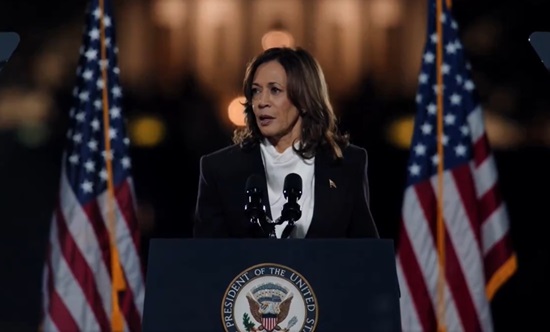
They also knew about the attempt to question Vice President Kamala Harris’ identity, claiming she had never identified as Black, even though she attended Howard University, one of the most prestigious historically Black colleges and universities in the country, and she proudly acknowledged she was the second Black woman senator, but not the last.
They knew about the attacks on diversity, equity, and inclusion, framed as “reverse discrimination,” suggesting DEI created an army of unqualified Black workers taking jobs from White men, despite longstanding evidence that White women have been among the primary beneficiaries of DEI and affirmative action.
They knew.
They knew about the anti-military comments and the public disrespect of an American war hero. We can never unhear the disparagement of Senator John McCain or ignore reports that he dismissed service members as “losers” and “suckers.” The erosion of a long-standing expectation that presidents have enough integrity and moral values to honor those who serve.
They knew.
They knew he was a convicted criminal. Thirty-four felony convictions, along with dozens of additional indictments.
They knew he was found liable for sexual assault. They heard him admit on tape to grabbing women without consent, language that plainly describes sexual assault. They also knew about his documented association with Jeffrey Epstein, whom he once acknowledged “liked young girls.”
They knew.
And yet, they voted for him anyway.
Now, as his approval ratings sink into the low 30s, the question lingers with uncomfortable clarity: why did it take so long, and so much disruption, for that knowledge to matter?
Why did it take chaos in our streets, fear in immigrant communities, rising tensions abroad, and instability at home for doubt to finally show up in measurable numbers?
This is where the conversation becomes uncomfortable, but necessary.
For some voters, particularly within immigrant communities, there was a belief that harsh policies would apply to “others.” That deportation efforts would target a specific group, not their own. That proximity to whiteness, citizenship status, or political alignment might offer insulation.
But history rarely honors those distinctions. Policies built on exclusion have a way of expanding. Lines drawn to separate “us” from “them” rarely stay where people expect.
As Dr. Martin Luther King Jr. said, “Injustice anywhere is a threat to justice everywhere.”
And many are now confronting that reality in real time.
But beyond policy miscalculations, there is a deeper truth we have to face. One that runs through American history with stubborn consistency. This country has always struggled to fully embrace Black leadership, and even more so when that leadership comes in the form of a Black woman.
Vice President Kamala Harris was not an unknown or untested figure. Her qualifications were clear. She served as District Attorney of San Francisco, Attorney General of California, and a United States Senator. She built a reputation as a disciplined prosecutor and a sharp, prepared lawmaker. A graduate of Howard University and University of California, Hastings College of the Law, her path reflects a traditional trajectory of public service and leadership.
She became Vice President of the United States, breaking barriers as the first Black woman and first South Asian American to hold the office. Her candidacy represented both experience and history.
Voters had a clear contrast. One candidate with limited formal education, a documented pattern of instability, legal issues, and inflammatory rhetoric. Another with decades of public service, institutional knowledge, and a conventional governing résumé.
And still, for many, including far too many Black men, that contrast was not enough—revealing just how deeply these perceptions run, even within communities most impacted by them.
It is easy to point to economic concerns or campaign strategies to explain the outcome. Those factors matter. But they do not fully explain the willingness to overlook what was already known.
Bias does not always shout. It often whispers. It shapes who we trust, who we see as capable, who we believe belongs in positions of power. It lowers the bar for some and raises it impossibly high for others.
It allows people to justify what they already know.
They knew, but they rationalized.
They knew, but they minimized.
They knew, but they lowered the standards.
They knew.
They just couldn’t vote for the Black woman.