Federal Courts Reject Trump’s Orders Targeting Law Firms; DOJ Drops Defense After Unanimous Constitutional Rebuke








The firms targeted included Perkins Coie, WilmerHale, Susman Godfrey, and Jenner & Block — firms the administration opposed because of their clientele, past legal work, and internal diversity policies.
The executive orders sought to revoke security clearances, restrict access to federal buildings, and jeopardize government contracts. Critics argued the effort amounted to punishing private firms for representing political adversaries and for maintaining diversity, equity and inclusion (DEI) initiatives.
What the Administration Pressured Firms to Do
Beyond formal sanctions, the White House pressured firms to:
-
Reconsider or drop certain clients
-
Eliminate DEI and affirmative action programs
-
Commit tens or hundreds of millions of dollars in pro bono work aligned with Trump-supported causes
According to CBS News, citing reporting by The Wall Street Journal, Trump “successfully extracted hundreds of millions of dollars in free legal services” from nine firms that cut deals with the White House in an effort to avoid similar directives.
Among those reaching agreements were Paul Weiss and Skadden Arps — concessions that sparked backlash within the legal community. Skadden alumni publicly criticized the deal, arguing it compromised core professional principles.
The Firms That Fought Back — and Won
Several firms refused to concede.
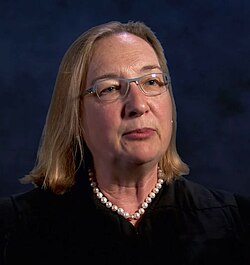
In a May ruling, U.S. District Judge Beryl Howell described the executive order against Perkins Coie as “an unprecedented attack” on the judicial system. Federal judges repeatedly found the orders violated foundational constitutional principles, including the First Amendment rights of free speech and association and the right of clients to retain counsel of their choosing.
WilmerHale said in a statement that its challenge was about defending “our clients’ constitutional right to retain the counsel of their choosing and defending the rule of law.” Jenner & Block emphasized that the administration’s retreat makes permanent earlier rulings declaring the orders unconstitutional.
Former Associate Attorney General Vanita Gupta said firms that capitulated “undermined the rule of law and the legal profession in this country,” calling the episode a test of “ethical courage.”
Rep. Jamie Raskin, a Democrat who represents Maryland’s 8th Congressional District and serves as ranking member of the House Judiciary Committee, praised the firms that resisted. In a statement, Raskin said they forced Trump to back down from what he called a “blatantly unconstitutional effort to punish lawyers, clients and causes because Trump disagrees with their speech.”
The DEI Narrative — and the Reality
A central demand in several agreements was the dismantling of diversity, equity and inclusion programs. In the context of these law firms, dismantling DEI programs would not only harm attorneys of color who are often unfairly stigmatized as beneficiaries, but would also disproportionately impact White women — who have historically gained the most from diversity and affirmative action initiatives in corporate America.
Research spanning decades, including federal workforce data and corporate employment analyses, has consistently shown that White women have been the largest beneficiaries of affirmative action policies. Yet Black professionals are frequently portrayed as the primary recipients in public debate and are often stigmatized as “unqualified” because of DEI — despite remaining underrepresented at senior levels in major law firms and corporations.
At firms like these, eliminating DEI programs would therefore roll back opportunities for both attorneys of color and White women, reinforcing a misleading narrative while reversing measurable gains in workplace representation.
A Constitutional Line Drawn
In the end, federal courts drew a clear constitutional boundary: a president cannot penalize private law firms because of the clients they represent, the speech they engage in, or the hiring policies they adopt.
The Justice Department’s decision to abandon its defense underscores the strength of that judicial rejection.
The episode leaves behind a defining contrast — between firms that endured political and financial pressure to defend constitutional principles and those that chose accommodation. The courts have made clear which position aligns with the Constitution.